Deepening Connections with Our Elected Officials at the 30th Annual Tahoe Summit
By Tony Karwowski, NTCA president and CEO Photo Credit: Tahoe Regional Planning Agency
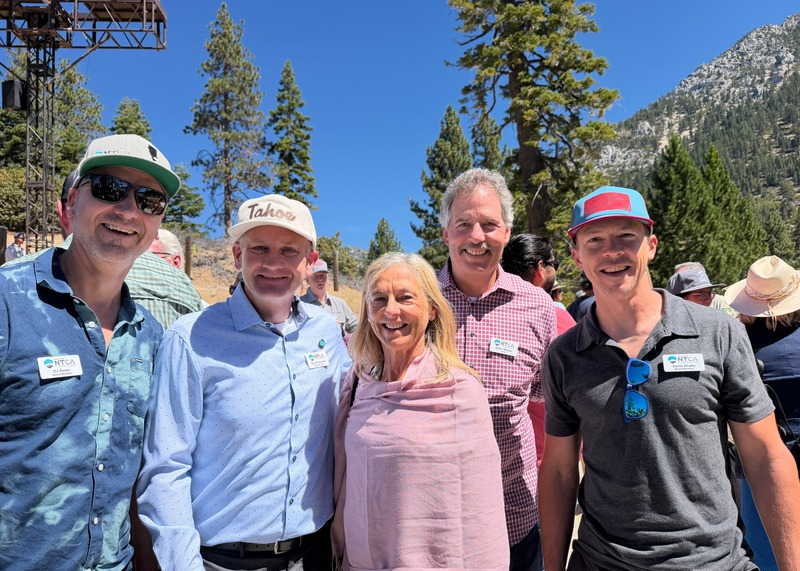
The 30th annual Lake Tahoe Summit, which took place August 19 at Sand Harbor, offered another opportunity to connect with elected officials who represent our communities and advocate for the protection of Lake Tahoe.
Bi-partisan support for Lake Tahoe and the $35 million in federal appropriations requested by the “Team Tahoe” delegation earlier this year as part of the Lake Tahoe Restoration Act was reaffirmed and celebrated. The funds support hazardous fuels reduction and forest health, regional water infrastructure upgrades to protect communities, aquatic invasive species prevention and control, watershed restoration and water quality, Lahontan cutthroat trout recovery, and program oversight and accountability.
By bringing elected officials together in Tahoe, the Summit also allowed for conversations about local priorities and how our business community has established and expanded opportunities for public-private partnership. In our case, the formation of the TBID and the progress that has been made as a result were points of discussion.
Meetings at our offices with Placer County officials, Congressman Kevin Kiley and Congressman Ami Bera resulted in their support of the effort to designate the Kings Beach District as an Opportunity Zone. Qualified Opportunity Zones encourage long-term investments through federal tax incentives, with approval partly contingent on a public referral process.
This type of in-person access to decision-makers is invaluable as our efforts to advance projects, programs, and initiatives that benefit our community continue. They also give us an opportunity to humanize their impact, reinforcing the critical need for this type of advocacy work.
NTCA’s Evolving Approach to Managing Peak Season Visitation
For residents, local business owners, and the many visitors who come to experience North Lake Tahoe, peak season congestion—and everything that comes with it—has been one of the region’s most persistent challenges for decades.
Since shifting from a traditional destination marketing organization to a destination stewardship and management organization, NTCA has been focused on addressing challenges that arise year-round, but particularly during North Tahoe’s busiest times of year. With input and collaboration from our community, we’ve built a foundation of programs designed to better manage the places that make North Tahoe special.
Some of our proactive work happens before visitors arrive in North Tahoe. Our communications efforts have shifted to help people understand that how they visit matters as much as whether they visit. We offer straightforward guidance on how small choices—arriving prepared, using Park and Ride or TART Connect, packing out trash, giving wildlife space, and more—help care for the region and result in a better experience for everyone.
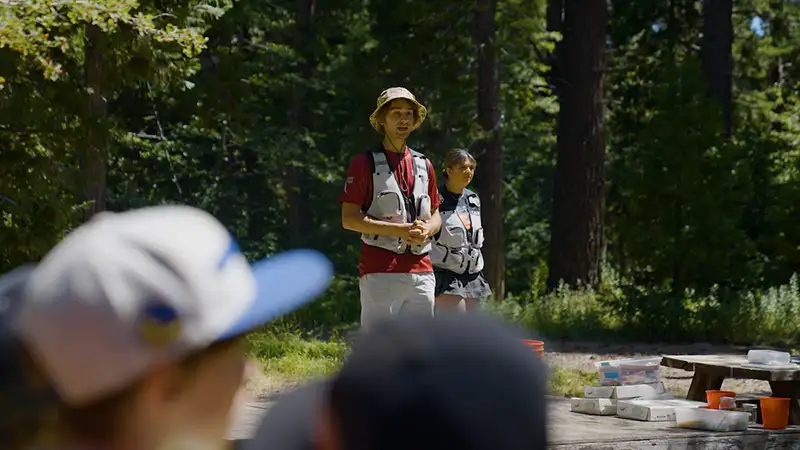
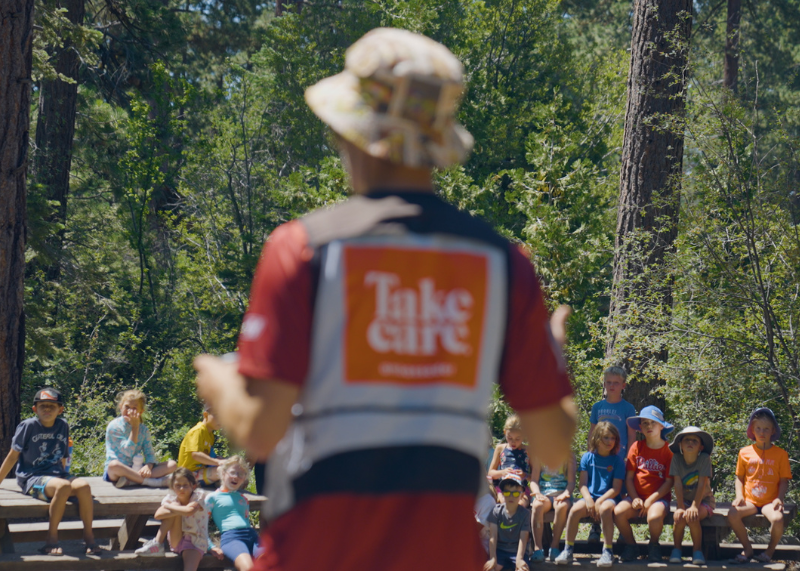
We use tourism-generated funding to deploy Stewardship Ambassadors on the ground at popular beaches and trailheads during peak periods to talk directly with visitors about fire safety, wildlife, and Leave No Trace practices. And, we fund projects and programs like the BEBOT beach cleaning robot, bike valet services and the Blue Beach program to help address the impacts of recreation on Tahoe’s most-loved beaches.
Tourism continues to be the backbone of our local economy, but our marketing campaigns are purposefully created to help spread out visitation and support businesses during quieter times of year. Our focus is on encouraging midweek and off-peak-season travel, with responsible travel framed as part of what makes a North Tahoe trip memorable. During busy seasons, our efforts are focused on stewardship tips designed to teach and inspire everyone to help take care of Tahoe.
We are listening, collaborating and leveraging relationships with regional partners including but not limited to; Placer County, US Forest Service, CA State Parks, California Tahoe Conservancy, and the Destination Stewardship Council to achieve desired outcomes, and continue to take action as it relates to efforts centered around the three E’s of sustainable destination management: Education, Engineering, and Enforcement.
Looking ahead, to us, that means continuing collaboration and expanding relationships with regional partners to continue education that results in more visitors arriving already informed about how to do right by the environment and the North Tahoe communities they move through. It means supporting infrastructure and transportation improvements that make responsible and reduced impact behavior choices easy. And, it means working alongside public safety officials so that policies designed to serve the best interests of our communities during peak periods are enforced consistently and fairly.
There will never be a single fix for managing peak season visitation, and no single organization that can do it alone. Continuing to listen, collaborate, and build on initiatives that have already demonstrated success—programs like Park and Ride, TART Connect, trash and other human impact mitigation strategies—are what we can do to help remedy ongoing and future challenges.
North Tahoe’s beauty is what draws people here in the first place. Managing that popularity thoughtfully is how we can ensure it stays worth visiting, and worth calling home.
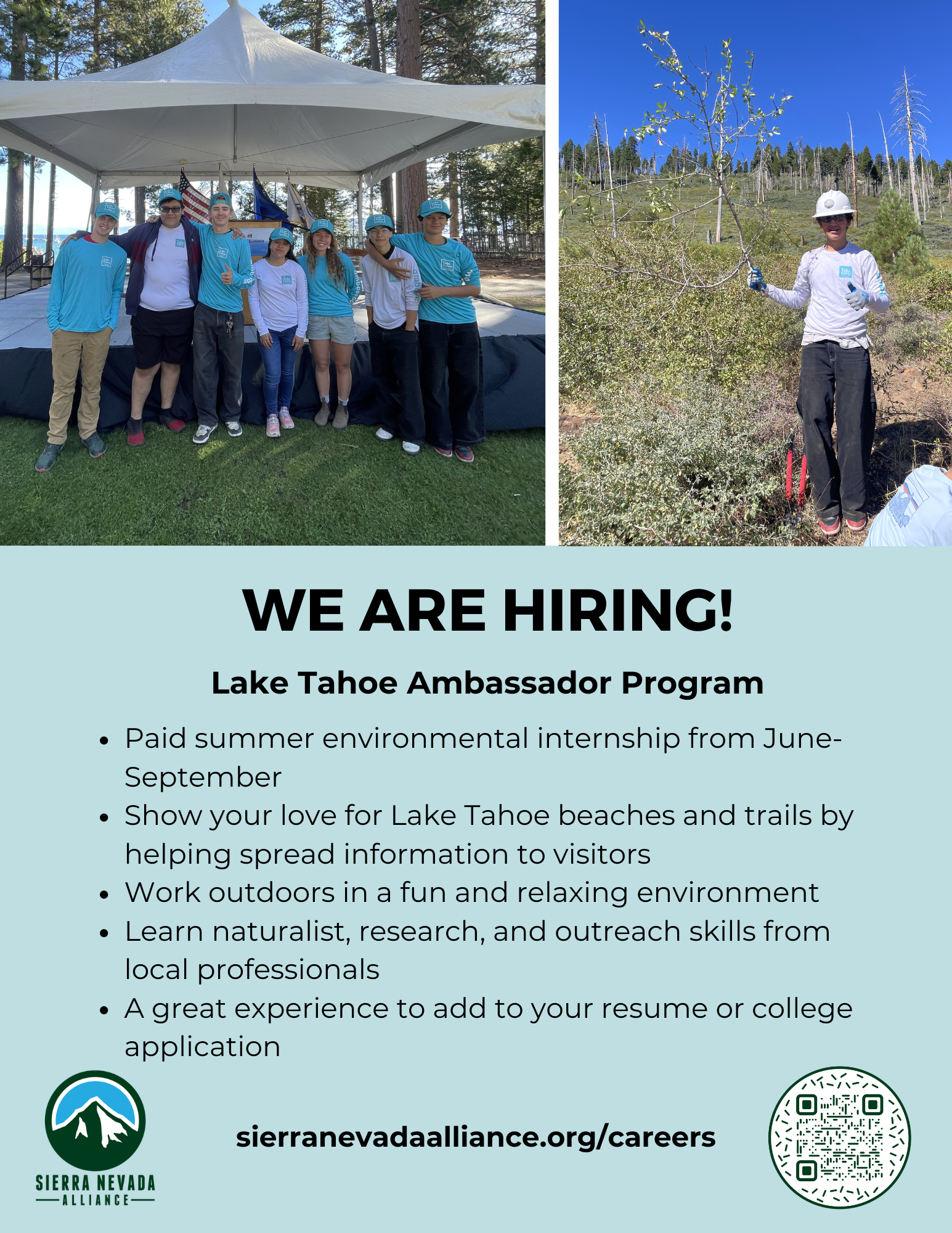
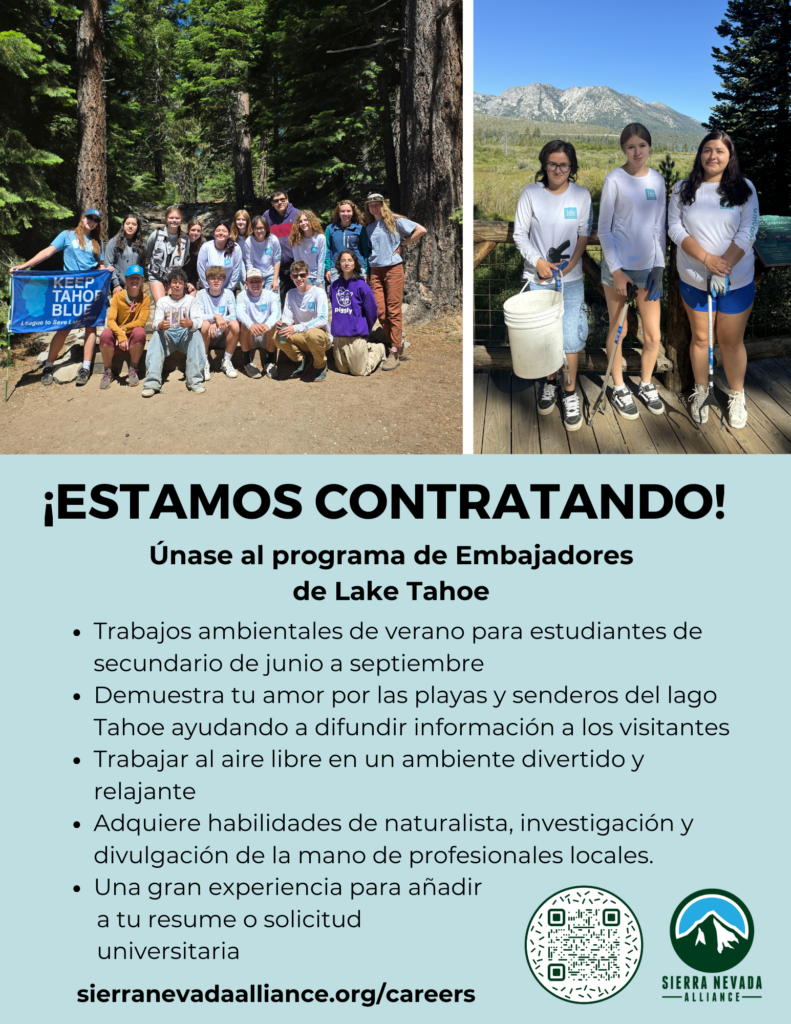
The Lake Tahoe Ambassador Program is a paid summer internship that trains local youth to become environmental stewards and public educators for the Lake Tahoe region. Led by college-level crew leaders, Ambassadors receive hands-on training in topics like natural history, wildfire prevention, trail stewardship, species identification, and communication skills. Throughout the summer, they engage with visitors at beaches, trailheads, and visitor centers, sharing ways to recreate responsibly and protect Tahoe’s natural environment. They also model stewardship in action—picking up litter, supporting clean recreation spaces, and using citizen science tools to track observations in the field.
Since 1993, the Sierra Nevada Alliance has been working to protect and restore Sierra lands, water and wildlife. The organization manages a variety of service programs, legislative initiatives and community engagement programs to make progress on priorities including climate resiliency, resilient forests, and watershed protection and restoration. Created to be a hub for stewardship, the Sierra Nevada Alliance facilitates the successful ambassador program throughout the Tahoe Basin by empowering and collaborating with partners including the NTCA.
Advocating for Community Priorities in D.C. as Part of ‘Team Tahoe’
By Tony Karwowski, NTCA president & CEO
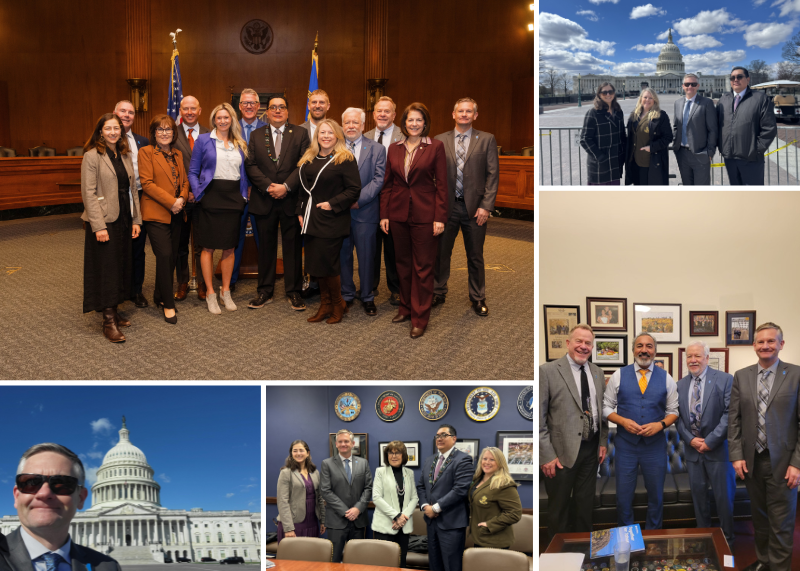
In March, I had the opportunity to join 11 other “Team Tahoe” representatives on an advocacy mission to Washington, D.C. Our goal: to meet with elected officials to address some of the major issues impacting Tahoe communities and advocate for both funding and legislation that will benefit everyone who lives, works, and spends time here. My role was to represent North Lake Tahoe, our community’s priorities that stand to benefit, and our unique private-public partnership funding mechanisms that help leverage both state and federal dollars.
In total, Team Tahoe met with five senators, 11 House representatives, and three agencies over the course of two days. During this particular trip, we were focused primarily on four topics – the first being Fiscal Year 2027 funding from the Lake Tahoe Restoration Act to support forest health, water quality, combat invasive species, and restore native trout.
Through annual federal appropriations, Tahoe receives funding to support environmental improvement programs in the Basin. We’ve accomplished a lot thanks to the Lake Tahoe Restoration Act, and those funds serve as an anchor for the state, local, and private funding matches that are necessary to fully pay for the environmental improvement programs that have been planned, completed, or are underway.
This year, we requested $35M for projects that include hazardous fuels reduction and forest health, regional water infrastructure upgrades to protect communities, aquatic invasive species prevention and control, watershed restoration and water quality, Lahontan cutthroat trout recovery, and program oversight and accountability.
To address Tahoe’s needs that extend beyond what the Lake Tahoe Restoration Act supports, our second request was for support for the Santini-Burton Act Modernization, which will fund land acquisition and management and unfunded priorities such as sustainable recreation with the intent of addressing human impacts, plus wildfire prevention and more. Modernization of the Act will also allow the Washoe Tribe consistent access to these funds for acquisition and management of cultural lands in the Basin.
Third, we encouraged support for the upcoming Surface Transportation Reauthorization, which is critical to supporting Tahoe’s $5 billion annual economy, and support for the BASICS Act, which provides transportation access to recreation on public lands. If approved, the Surface Transportation Reauthorization would provide an opportunity to support continued progress toward achieving our region’s transportation vision, which includes safely connecting our neighborhoods and sustainably serving our community, while reducing traffic congestion, vehicle miles traveled, and environmental impacts associated with vehicle travel.
Finally, we spoke about Water Resources Development Act priorities, which authorizes the U.S. Army Corps of Engineers to study, plan and implement water-related projects.
Opportunities like these provide in-person access to decision-makers who can help advance projects, programs, and initiatives that benefit our community. They also give us a chance to highlight and humanize the impact, while demonstrating the progress and strong public/private partnerships that are addressing some of Tahoe’s biggest challenges.
This is how this work is accomplished, and how at the federal level, the voice of our community can be heard. It’s why our role in this type of advocacy work is critically important. We’ll be sure to provide periodic updates on projects around the lake that are supported by these funding sources in upcoming CEO newsletters.
Stepping Into the Co-Chair Role of the Lake Tahoe Destination Stewardship Council (Opinion)
By Tony Karwowski
Stewardship isn’t an abstract idea in Lake Tahoe—it’s a vital part of caring for this incredible place. Every day, those of us who live, work, and build businesses here feel the responsibilities and pressures that come with caring for a world-renowned destination we call home.
We share the same roads, trails, beaches, waters, and forests with visitors—many of whom also have a deep appreciation of this place. Ultimately, I believe we all want the same thing: to ensure Lake Tahoe remains healthy, thriving, and accessible for generations to come. That’s why I am honored to step into the role of co-chair of the Lake Tahoe Destination Stewardship Council.
This council was created because the region required better collaboration between jurisdictions, agencies, the business sector, and other community organizations. It reflects a simple truth: the future of Tahoe depends on active collaboration across the boundaries we have ourselves created. We need a unified vision backed by shared accountability, aligned outcomes, and the collective will to take action.
The Destination Stewardship Plan we adopted together offers exactly that. It lays out a roadmap for managing Tahoe as a place to live as much as a place to visit. It recognizes that our environment and our economy do not exist in separate lanes, and that community wellbeing is central to everything we hope to accomplish.
One of the initiatives the over 30 partners of the Destination Stewardship Council are actively collaborating on to help encourage stewardship of Tahoe is the “Destination Champion” program. Developed as an online training program for community members and local professionals and front line employees, when it launches, it will provide effective strategies for teaching visitors about our region’s unique culture and how to encourage people to help care for and protect what makes Tahoe and Truckee special.
It is through our collaborative efforts that progress is being made throughout the region. Whether individual, or sometimes joint organizational initiatives, those aligned with Destination Stewardship Plan goals are advancing our collective efforts and making true the popular proverb: “If you want to go fast, go alone. If you want to go far, go together.”
The opportunities ahead for Tahoe—expanding environmental stewardship, enhancing shared transportation options, workforce retention—do not recognize county lines or organizational boundaries. They require a coordinated response. The council brings together public agencies, nonprofits, businesses, tribal partners, and local representatives from around the basin to set priorities and move from discussion to action.
As co-chair alongside Daniel Cressy from the USDA Forest Service Lake Tahoe Basin Management Unit, and Nettie Pardue the Destination Stewardship Council’s Managing Director, our focus will continue to be deepening our alignment across the region and ensuring that we are all working in the same direction, toward the same goals.
I also want to thank Carol Chaplin, CEO of the Lake Tahoe Visitors Authority, for leading the way as one of the first co-chairs of the Council. Together with Daniel Cressy, the Executive Council and Council members, her leadership has set a path forward for us to build upon in the future.
I am continually inspired by the leadership and commitment around the Council table—these are people and organizations who care deeply about this place and their role in helping to take care of it. Lake Tahoe is extraordinary, and this council established a framework, the partnerships, and the shared resolve we need to move forward together.
– Tony Karwowski is president and CEO of the North Tahoe Community Alliance
The Roadless Rule: Advocating for the Value and Importance of Tahoe’s Roadless Areas
In collaboration with area partners, including Supervisor Gustafson’s office and area nonprofits, including the Sierra Nevada Alliance, Tahoe Rim Trail Association, Tahoe Backcountry Alliance, the Tahoe Resource Conservation District and others, the NTCA recently participated in an aerial tour of Tahoe’s roadless areas with a staffer from State Representative Kevin Kiley’s team.
The intention of the tour and subsequent roundtable discussion was to share local perspectives about how rescinding the Roadless Rule could impact our local communities, economy and environment.
Adopted in 2001 after one of the largest public engagement efforts in U.S. history, where over one million people commented when the original rule was being considered, the Roadless Rule currently protects 58 million acres nationwide, including 4.4 million acres in California.
The rule sought to protect areas that were identified as key for water quality, backcountry recreation experiences, and biodiversity by preventing new permanent road construction and reconstruction, with a few exceptions (e.g., for public safety, wildfire response, or certain access needs like mining claims with valid existing rights), and preventing commercial timber harvesting (large-scale or industrial logging), while still allowing limited tree cutting for wildfire fuel reduction, restoration, personal firewood/gathering, or when necessary to protect public health and safety.
This year, the U.S. Department of Agriculture announced a process to rescind the Roadless Rule. If adopted, this change would lift restrictions on new road construction and industrial logging in inventoried roadless areas.
Congressman Kiley’s district includes some of the most visited and beloved Inventoried Roadless Areas (IRA) in the Sierra Nevada, spanning the Tahoe and Eldorado National Forests and the Lake Tahoe Basin Management Unit. Together, these landscapes protect lands vital to clean water, recreation, habitat, and wildfire resilience.
With that in mind, the tour highlighted key places that are central to both the region’s ecology and outdoor economy, including Castle Peak and Granite Chief, areas surrounding Desolation Wilderness and Freel Pass, terrain around the West Shore of Lake Tahoe, and east of the California border to the Mt. Rose Wilderness.
The Tahoe Summit Provided a Unique Opportunity to Connect with Our Elected Officials
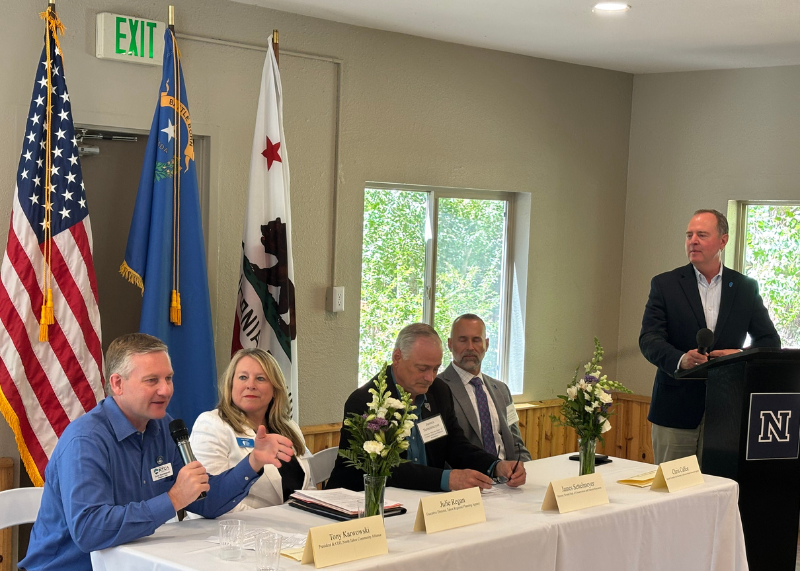
This year, the annual Tahoe Summit, started nearly 30 years ago by California Senator Dianne Feinstein, Nevada Senator Harry Reid, and President Bill Clinton, was centered around the theme of “Protecting Lake Tahoe: Balancing Sustainable Recreation and Conservation.”
Unlike other advocacy opportunities the NTCA has participated in, this gathering, which has historically served as a bipartisan collaboration in support of protecting Lake Tahoe, presented a unique chance to meet and connect with more elected officials from both states at a single event than we’ve had the privilege of participating in before.
It provided a chance to explain how our local business community has helped establish and expand opportunities for public-private partnerships. And, it was an opportunity to highlight the TBID and its role in broadening the funding sources for our community’s priorities – such as transportation and trails, human impact mitigation, environmental stewardship initiatives, as well as business advocacy.
NTCA president and CEO Tony Karwowski shared with California Senator Adam Schiff, Nevada Senator Jacky Rosen, Nevada Senator Catherine Cortez Masto, California Assemblywoman Hadwick, and Senator Alvarado-Gil, among others, how the NTCA and the committees it convenes are putting TBID dollars to work on behalf of our community in support of collaborative stewardship efforts in North Lake Tahoe and beyond.
He also addressed the NTCA’s involvement in the creation of the Lake Tahoe Destination Stewardship Plan, its implementation, and the efforts we’re aligning on across agencies, businesses, NGOs and land managers to elevate the Tahoe experience for all.
By directly engaging and building relationships with elected officials, citing real examples of how North Lake Tahoe is investing in itself, we not only elevate local leadership but also increase the likelihood of securing future state and federal support for community-driven solutions.
2025 North Lake Tahoe Beach Cleanings: See the Full Schedule
This summer and fall, ECO-Clean Solutions is again leading the charge to clean Lake Tahoe’s beaches in partnership with TOT-TBID Dollars At Work. As part of year 2 of a 3-year grant program, ECO-Clean will conduct 14 cleanings across key lakefront properties and public beaches, removing harmful debris, protecting native species, and keeping Lake Tahoe clean. In 2024, ECO-CLEAN Solutions removed 19,753 non-native/inorganic items, including 9,195 pieces of plastic. The overall area cleaned was approximately 482,000 sq/ft.
Below is the full schedule of 2025 cleanings, including demo events open to the public.
2025 Beach Cleaning Schedule
Kings Beach State Recreation Area
July 2, 3 & 5, 2025
October 1 & 2, 2025
Mourelatos Lakefront Resort
May 7 & 8, 2025
September 10, 2025
Franciscan Lakeside Lodge
May 7 & 8, 2025
September 18, 2025
Lake Forest Public Beach
May 15, 2025
September 18, 2025
Moon Dune Public Beach
May 14, 2025
September 11, 2025
Demo Cleanings & Public Events
These special cleanings are paired with education and demonstrations of ECO-CLEAN’s innovative technology:
Commons Beach – Farmers Market Demo & Cleaning
July 17, 2025
Tahoe Vista Recreation Area – Demo & Cleaning
September 11, 2025
TOT-TBID Dollars At Work helps to fund BEBOT and other projects focused on human impact mitigation. Learn more here.
My Insights from the CalTravel Board of Directors Meeting
NTCA President and CEO Tony Karwowski shares his insights from the CalTravel Board of Directors Meeting.
As part of the NTCA’s advocacy efforts, I attended the CalTravel Board of Directors Winter Meeting in San Francisco last week. I participated in conversations related to destination stewardship, North Lake Tahoe’s hosting of the CalTravel Summit in October 2025, and more.
This forum also provided an opportunity for North Lake Tahoe to have a voice at the table as it relates to proposed legislative actions that can have impacts on the tourism industry and affect businesses in our region.
Other topics discussed include:
San Francisco is working hard with new leadership to provide a safe, clean city with a thriving business community targeted at reviving the tourism industry. As San Francisco is a major entry point into Northern California for international visitors, North Tahoe will benefit from the success of tourism in San Francisco as international visitors return.
The two-year legislative session has opened. CalTravel is monitoring proposed legislative actions that have both positive and negative impacts on the tourism industry and preparing positions on the bills moving forward for the membership. At Advocacy Day on May 20, NTCA will join over 200 other Travel and Tourism industry representatives to meet with legislators and share the real-world impacts of the proposed legislation on our local businesses and communities.
Visit California gave an update on the statewide Destination Stewardship planning process they have been working on in conjunction with the 12 different tourism regions and representatives of those regions. As a partner involved in the High Sierra region planning effort, NTCA was able to bring themes that surfaced in our Lake Tahoe Destination Stewardship Plan development process. We also helped integrate regional priorities into the state-funded effort while highlighting relevant priorities like workforce housing, transportation, human impact mitigation, and environmental stewardship.
CalTravel also highlighted CalTravel Summit 2025, which will be held at Everline Resort in Olympic Valley from October 6-8, 2025. This is their largest annual gathering, bringing over 400 travel and tourism leaders for three days of compelling speakers, interactive breakout sessions, and unique networking opportunities—all geared toward professional and personal growth. Through our strong partnership with CalTravel, NTCA was instrumental in bringing this iconic summit to North Lake Tahoe, allowing us to showcase our destination to the most influential travel professionals from across the state of California and beyond. There is a discounted rate for members who wish to attend. For more info, visit https://www.caltravel.org/upcoming-events and let us know if you would like to attend!
As the snow begins to fall, many of us are eagerly planning our winter trips to the ski resorts. For years, the routine has been the same for residents and visitors alike: load up the car, drive to the resort, and look for parking for a day of skiing or snowboarding. But with the introduction of parking reservations at Northstar California Resort and Palisades Tahoe starting last winter, it’s time to consider an alternative: taking fare-free transit to the slopes.
This season presents the perfect opportunity to explore transit options. Not only do these services provide an environmentally-friendly, free, and convenient solution when resort parking is full, but they also offer a chance to connect with fellow skiers and enjoy a more relaxed, community-focused experience.
Last winter, the parking reservation programs at Northstar and Palisades helped stagger arrival times, easing congestion on weekends and reducing traffic on Highways 89 and 267. Tahoe Truckee Area Regional Transit (TART) has been supporting this change, offering fare-free and convenient transportation alternatives. By utilizing the TART Park & Ride program, TART’s mainline bus service, and TART Connect, skiers and snowboarders can leave their cars behind and take free transit to the resorts.
For visitors heading to Palisades, TART and Palisades Tahoe have teamed up to offer a free weekend Park & Ride program again this season at two locations: Truckee High School and the Tahoe City Transit Center. From there, passengers can catch a free shuttle to the resort. New for this season, the TOT-TBID Dollars at Work program, which reinvests revenue into the community, will be funding additional shuttles that will add service and reduce headways to every 20 minutes when traffic is flowing smoothly.
Palisades Tahoe skiers and riders are encouraged to use Mountaineer, the free, on-demand transportation service providing rides within Olympic Valley, Alpine Meadows, and between the valleys. For more details, visit mountaineertransit.org.
Northstar also offers a convenient Park & Ride service on weekends. Parking is available at Lift Workspace near the Truckee Tahoe Airport with free hourly TART service to Northstar. Additionally, supplemental shuttle services will operate on holiday weekends to accommodate the larger crowds expected on those dates.
Sugar Bowl and Donner Ski Ranch are joining the transit trend this winter with shuttle service between Truckee and Donner Summit. Starting this season, there will be free daily shuttle service from the Coldstream transit stop in Truckee to these resorts. Employees, visitors, and residents can catch a TART bus to the Coldstream bus stop or get an on-demand ride from TART Connect, then transfer to a shuttle that will take them directly to Sugar Bowl or Donner Ski Ranch. This new service offers a hassle-free alternative to driving up Old 40 or I-80.
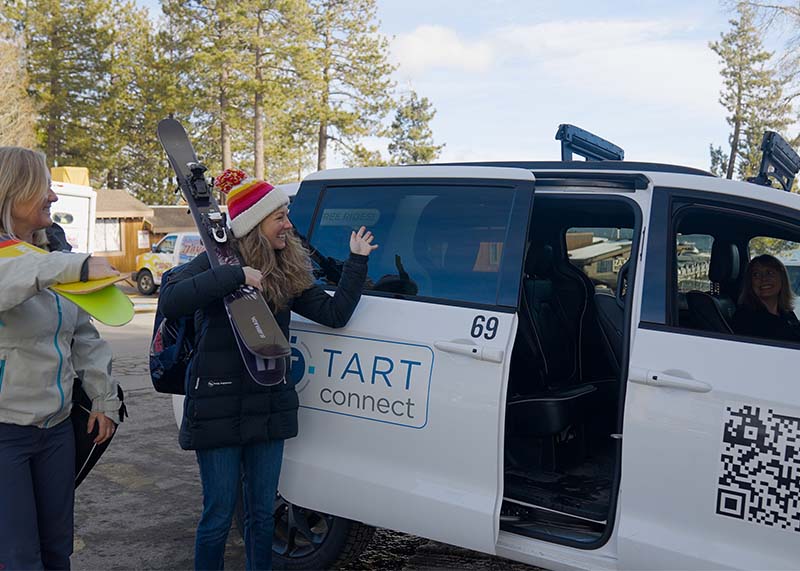
In addition to Park & Ride options, TART Connect provides on-demand microtransit to help skiers make that first and last mile connection. TART Connect allows riders within a designated service area to request a fare-free ride from their home or rental property to the nearest shuttle stop. Simply download the app, schedule a pickup, and you’ll be on your way shortly. This added layer of convenience makes it easier than ever to leave your car at home.
These transit options are made possible through the collaboration of local organizations, including Placer County, the Town of Truckee, Tahoe Forest Hospital, Visit Truckee-Tahoe, Palisades Tahoe, Northstar, Sugar Bowl Resort, and North Tahoe Community Alliance.
By ditching your car and enjoying a more relaxed journey to your favorite ski resorts this season, you’ll also have the opportunity to enjoy the ride and connect with others on the way to the slopes. You might just find that the journey to the resort is as fun as the skiing and riding itself.
Sara Van Siclen is the executive director of the Truckee North Tahoe Transportation Management Association, a nonprofit dedicated to fostering public-private partnerships and resources for advocacy and promoting innovative solutions to the unique transportation challenges of the Tahoe/Truckee Resort Triangle. Sara lives in Truckee with her husband, son, and dog, Jax.
The TOT-TBID Dollars At Work program is powered by the North Tahoe business community. Thank you to the business owners who created the Tourism Business Improvement District. In partnership with Placer County.