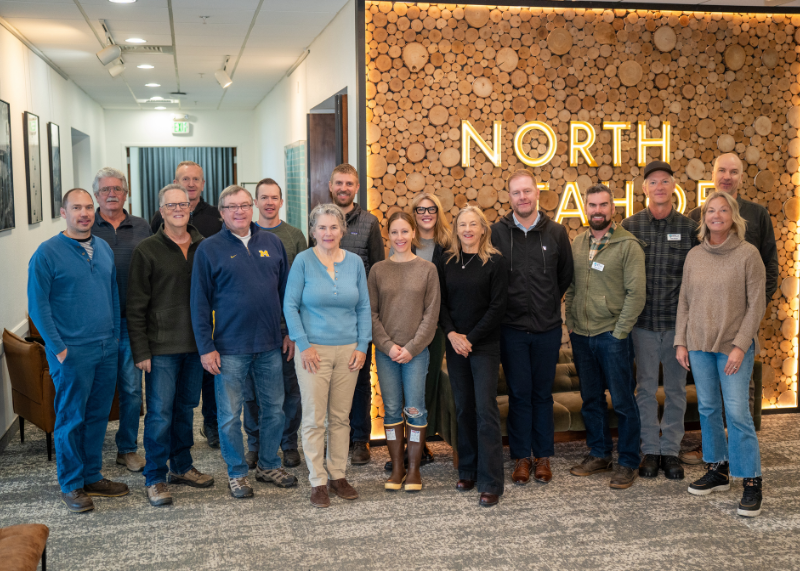
NTCA Seeking Candidates for Board of Directors: Submit Applications by February 2

Mon | Feb 9, 2026

NTCA Seeking Candidates for Board of Directors: Submit Applications by February 2

The North Tahoe Community Alliance (NTCA) is seeking candidates for its Board of Directors to help guide the work of the organization in its responsibilities under the North Lake Tahoe Tourism Business Improvement District (NLT-TBID) and in contracts with the County of Placer that focus on destination management and marketing, housing and transportation, and sustainability initiatives. NTCA is focused on leveraging the TOT-TBID Dollars At Work program to foster economic health, community vitality, and environmental sustainability that benefits local residents, businesses, and visitors.

There are five seats open for election as identified:

  • Northstar Business Association (organization designated seat)
  • Northstar California (organization designated seat)
  • Ritz-Carlton (organization designated seat)
  • Tahoe City Downtown Association (designated seat)
  • West Shore Lodging/Property Management (designated seat)

Eligible candidates must be an owner, manager, of an assessed active, current business (or the designated representative of that business) within the NLT-TBID district as defined in the corporation by-laws.

Ballots have been sent in prior to February 2, 2026, the election will occur in March 2026, and new board members will be seated at the April 2026 Board of Directors meeting.


Candidate Statements

Read the statements below to learn more about the candidates for the NTCA Board of Directors.

Josh Johnson, Director of Finance at The Ritz-Carlton, Lake Tahoe
DJ Ewan, Director of Business Development at Granlibakken Management Company
Fred Kruse Schneider, Jr., Lake Tahoe Branch Manager for Local Vacation Rentals
Robb Olson, licensed architect, contractor and real estate broker

Here’s How the TBID is Transforming North Lake Tahoe–And Why Renewing It Matters (Opinion)

Wed | Nov 19, 2025

Here’s How the TBID is Transforming North Lake Tahoe–And Why Renewing It Matters (Opinion)

Adam Wilson, Chief Operating Officer, North Tahoe Community Alliance
Published in the Sierra Sun on November 15, 2025 >

Having grown up here, for as long as I can remember, North Lake Tahoe has faced a critical question:  how do we maintain a vibrant, sustainable, and resilient economy that supports the people who live and work here, while also preserving what makes this place so special for everyone?

One tool that has proven effective has been the formation of the North Lake Tahoe Tourism Business Improvement District (TBID).

Established through a collaborative effort among local business leaders, the TBID is a self-assessment made by lodging, retail, restaurant, and activity-based businesses within our community. It’s not a tax—it’s a collective commitment to addressing community priorities. And it has created a locally controlled, dedicated source of primarily tourism-generated funding that allows us to reinvest in the priorities that matter most to our region.

Why We Need the TBID

Before the TBID, the only source of tourism based revenue generation was transient occupancy tax (TOT) revenue generated by overnight visitors, which is allocated by Placer County. The TBID created a more flexible and locally governed tool to reinvest revenue generated not only by overnight visitors, but those who visit for the day, directly into the community—supporting infrastructure, programs, and services that benefit residents, visitors, and the local economy.

This shift has empowered our business community to help decide how funds are allocated, ensuring local priorities are reflected in our investments. The result is a more transparent, community-focused approach to making tourism work for our region.

What the TBID Has Made Possible

Since the TBID’s launch, tourism-generated dollars have been put to work in tangible, impactful ways. Through the TOT-TBID Dollars at Work program, $33.5 million of TOT and TBID funds have been invested in programs that likely wouldn’t have been possible otherwise.

Here are just a few examples:

  • Microtransit Expansion: TBID funds have helped support TART Connect, the free, on-demand microtransit service that improves mobility for residents and visitors.
  • Workforce Housing Programs: Initiatives like Lease to Locals and the Workforce Housing Preservation Program have been supported by the TBID to help provide housing options for local employees.
  • Environmental Stewardship Initiatives: Investments in the Clean Up the Lake scuba cleanups, the BEBOT beach cleaning robot, and Don’t Drop the Top campaign reflect our commitment to protecting Tahoe’s natural resources.
  • Trail and Recreation Access Improvements: TBID funding has supported winter trail grooming, bike and pedestrian safety, and trail and trailhead improvements to ensure everyone can enjoy Tahoe.
  • Local Business Support: Tourism development, Love North Tahoe shop, dine and play local, event funding, workforce vanpool programs and destination management efforts have helped our businesses stay strong year-round—not just during peak seasons.

What the TBID Means for Our Future

If renewed by the business community this fall, the TBID will continue to serve as a cornerstone of responsible destination management. It will allow us to continue to invest in workforce housing solutions and clean transportation options, protect our natural environment, and ensure that North Lake Tahoe evolves in a way that is authentic, inclusive, and sustainable.

It also ensures that local businesses maintain a direct voice in how tourism revenues are spent—something that is crucial for the long-term economic health of our community.

A New Era of Local Investment

From my perspective as COO of the North Tahoe Community Alliance, the TBID has fundamentally changed how we think about reinvestment. For the first time, we have a reliable revenue stream that is directed by our community, for our community. Our board and committees—comprised of local business owners and stakeholders—carefully evaluate every funding request to ensure it aligns with our shared goals:  improving quality of life, sustaining our economy, and protecting our natural assets.

This isn’t just about tourism—it’s about transformation. The TBID allows our community to address long-standing needs, pilot creative solutions, and build a future where North Lake Tahoe can thrive—economically, environmentally, and socially.

As we look ahead, I encourage our business community to continue engaging in this process. The TBID represents our collective power to shape the future of North Lake Tahoe, and its renewal is critical to continuing the progress we’ve made together.

Let’s keep building a North Lake Tahoe that works for all of us.
Celebrating Kym Fabel's Retirement

Mon | Nov 3, 2025

Celebrating Kym Fabel’s Retirement

After 27 years as the North Tahoe Visitor Information Center Manager, Kym Fabel recently retired, leaving behind a lasting legacy in North Lake Tahoe. Known as the welcoming face of the region, Kym shared her warmth, local knowledge, and passion with countless visitors and community members, helping make their stays unforgettable.

A self-described “Navy Brat,” Kym was born in Spain and has lived across the country—including Norfolk, San Diego, Pacific Grove, Castro Valley, Davis, and Tahoe. Over the years, she has worked in diverse roles, from testing Central Valley soils for gas exploration at Chevron to ticket sales at Alpine Meadows Ski Resort and serving as Director of Group Sales at the Monterey Bay Aquarium, where she launched the aquarium’s first behind-the-scenes tours. She also worked in lodging at Northstar California Resort before finding her “dream job” at the Visitor Center in Tahoe City in 1999.

In her role, Kym thrived on helping visitors discover the best North Lake Tahoe recreation, restaurants, and lodging. She enjoys mountain biking, paddleboarding, hiking the Tahoe Rim Trail, and volunteering as a site steward, monitoring archaeological sites in Nevada with the BLM and U.S. Forest Service.

Kym’s dedication, expertise, and genuine spirit have made a lasting impact on our community. Please join us in celebrating her remarkable career and wishing her all the best in her well-deserved retirement!

NTCA's Kirstin Guinn Honored With Lake Spirit Award

Tue | Oct 28, 2025

NTCA’s Kirstin Guinn Honored With Lake Spirit Award

NTCA is proud to celebrate Marketing Director Kirstin Guinn, who was recognized with a Lake Spirit Award by the Tahoe Regional Planning Agency on October 22. This annual award honors individuals who go above and beyond to protect and restore Lake Tahoe’s environment.

Kirstin was recognized for her leadership in destination stewardship, helping create a tourism economy that gives back while educating visitors, businesses, and residents about protecting Tahoe’s unique natural and cultural resources. Through her work, NTCA continues to build collaboration across the region, ensuring the lake remains clean, safe, and vibrant for generations to come.

“The Lake Spirit Awards celebrate the champions of Tahoe,” said TRPA Executive Director Julie Regan. “Kirstin’s innovative outreach shows how thoughtful action can have a lasting impact on the health of the lake.”

For more on this year’s Lake Spirit Awards, visit trpa.gov/awards.

NTCA Shares 2024-25 Annual Report

Tue | Sep 9, 2025

NTCA Shares 2024-25 Annual Report

The North Tahoe Community Alliance is proud to share the release of its 2024–25 Annual Report, available in both English and Spanish. The report provides a comprehensive look at the many ways NTCA is working to strengthen our community, support local businesses, and responsibly manage tourism.

Inside, you’ll find highlights from across the organization’s key areas of work, including:

  • TOT–TBID Dollars at Work: Stories of projects, programs, and initiatives made possible through community reinvestment.
  • North Tahoe Chamber: How we’re supporting businesses and strengthening the local economy.
  • Tourism Data: Insights into tourism’s impact on North Lake Tahoe and how it shapes our community.
  • Advocacy Efforts: NTCA’s work to amplify local voices and advance regional priorities.
  • Strategic Plan: A look ahead at the goals guiding our work through 2028.

Over the past year, NTCA has focused on maximizing the reinvestment of tourism-generated dollars directly back into our community. Since 2022, $76.5 million in direct and matching funds have supported initiatives that align with community priorities, from infrastructure and transportation to environmental stewardship and community vitality.

We invite you to explore the Annual Report and see firsthand the impact of this work. Together, we are building a stronger, more sustainable future for North Lake Tahoe.


Submit Your Annual Grant Cycle Application by September 5 at 11:59 p.m.

Wed | Sep 3, 2025

Submit Your Annual Grant Cycle Application by September 5 at 11:59 p.m.

The 2025-26 Annual Grant Cycle is accepting applications for projects that enhance community vitality, economic health, and environmental sustainability in North Lake Tahoe. Applicants have until September 5, 2025 to request TOT-TBID Dollars at Work funds for projects ready for immediate implementation upon approval. To date, $33.5 million in TOT-TBID Dollars at Work revenues have been directly invested in the North Tahoe community.

Annual Grant Cycle applicants are required to indicate which priority area(s) they will positively impact, including:

  • Community Enhancement and Visitor Integration Infrastructure – community and visitor enhancement for the enjoyment of all.
  • Environmental Stewardship and Mitigation of Tourism Impact – mitigation of the impacts of tourism on our community and environment, and enhancing and protecting environmental sustainability.
  • Transportation – enhancing efficient transportation throughout the region.
  • Workforce Housing – creating a sustainable community through making housing affordable.
  • Trails – enhancing recreational trail use and connecting neighborhoods in non-automotive ways.

Grant applications will be accepted online until 11:59 p.m. on Friday, Sept. 5, 2025. No applications will be accepted after this deadline. Applicants will be notified of funding decisions in early 2026.

A series of workshops providing details on the structure of the Annual Grant Cycle and covering key sections of the application was offered to interested applicants in August. Topics included an introduction to the Annual Grant Cycle application and reporting requirements, a housing workshop to help direct housing applications, and a budget and finance workshop. In-person and hybrid office hours were also available for applicants to ask specific questions. Watch workshop recordings here.


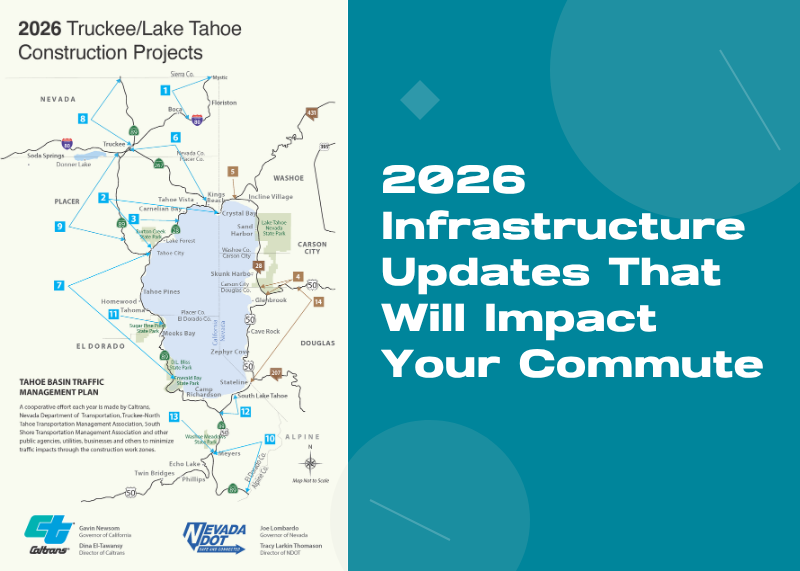
2025 Infrastructure Updates That Will Impact Your Commute

Tue | Aug 26, 2025

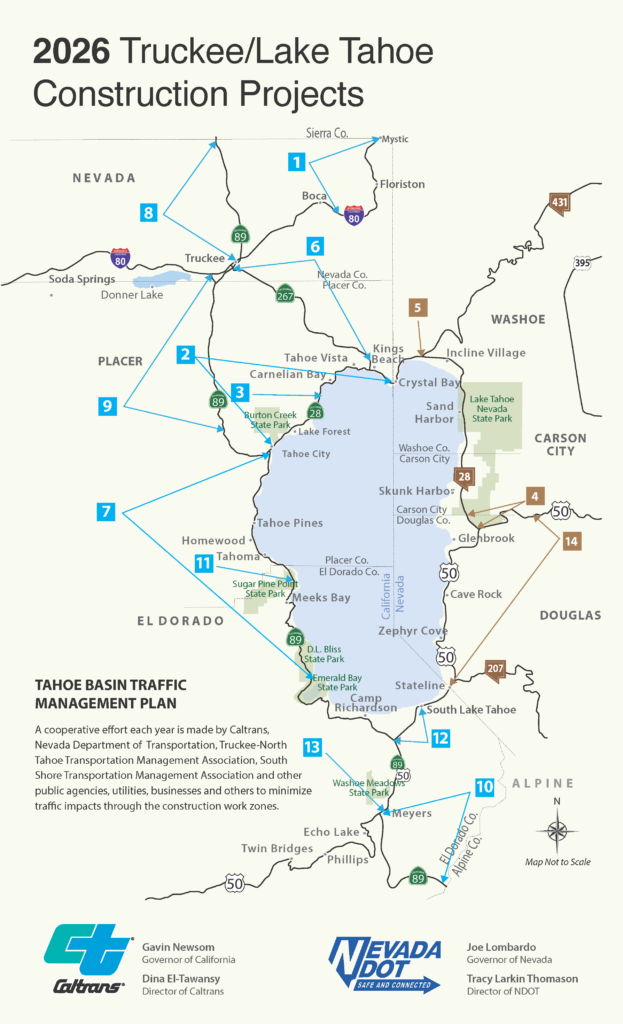
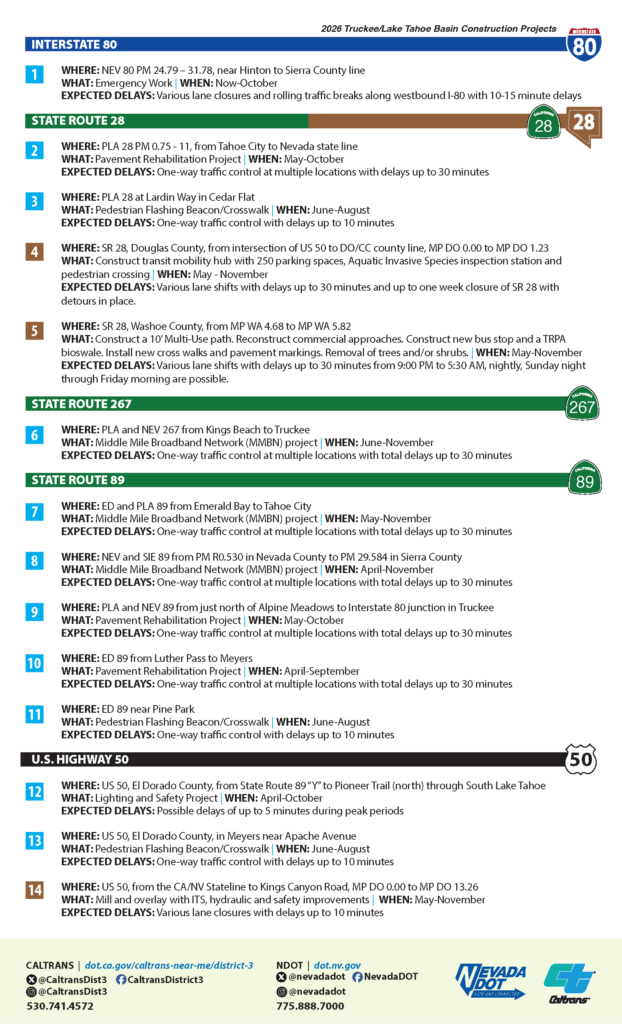
2025 Infrastructure Updates That Will Impact Your Commute

A number of projects are occurring in the region that will improve and repair infrastructure but will also impact traffic and transportation at multiple locations encircling the lake this summer. In North Lake Tahoe specifically, from Tahoma to the state line in Crystal Bay, expect delays Sunday night through mid-day Friday. Plan ahead and, whenever possible, take public transportation or make use of the region’s paved and dirt trail network.

While drivers on SR 28 will continue to face challenges this summer (and beyond)—particularly mid-week—please consider the long–term benefits: new broadband capabilities for the benefit of our community, the replacement of the Fanny Bridge in Tahoe City, water system reconstruction, and smooth and durable pavement.

This page will continue to be updated throughout the summer road construction season with current updates, so bookmark this page to stay in the know about what’s happening and where to expect delays. Plus, view the Construction Guide created especially for our business community.


CALIFORNIA (SR 28)

TAHOE CITY TO KINGS BEACH

Pavement Rehabilitation Project

Lead agency: Caltrans

Work goes through September.

Area impacts:

  • Tahoe City
  • Work is scheduled from 7 p.m. to 7 a.m. Sunday, September 21 through Thursday, September 25 and from 7 p.m. Thursday, September 25 through noon Friday, September 26 between Mackinaw Road and Grove Street. Access to cross streets and driveways will remain open, however no street parking will be permitted in the construction zone.
  • You can see the stages of construction here.

Middle Mile Broadband Network Project

Contractor: Teichert Construction

Work to occur April (weather permitting) – August

Area Impacts:

  • SR 28 between Tahoe City and SR 267 junction in Kings Beach
  • One-way traffic control at multiple locations with delays up to 30 minutes
  • Utility work is scheduled along SR 28 Monday, September 22 through Thursday, September 25 from 9 p.m. until 6 a.m. at Lardin Way in Cedar Flat.

NTPUD Watermain Crossing

Lead agency: NTPUD

Work to occur early May

Area Impacts:

  • SR 28 near Old County Road
  • Estimated less than one week of traffic impact with 24-hour single-lane traffic control


KINGS BEACH TO STATELINE

Middle Mile Broadband Network Project

Contractor: Arcadian

Work to occur May (weather permitting) – August

Area Impacts:

  • Kings Beach to Crystal Bay
  • One-way traffic control at multiple locations with delays up to 30 minutes
  • Utility work is scheduled along SR 28 Monday, September 22 through Thursday, September 25 from 7 a.m. until 5 p.m. between Raccoon Street in Kings Beach and East Agatam Avenue in Tahoe Vista.
  • Broadband utility work is also scheduled along SR 28 Monday, September 22 through Friday, September 26 from 7 a.m. until 7 p.m. between the State Route 267 junction in Kings Beach and the Nevada state line


WEST SHORE

Madden Creek Water System Reconstruction Project

Lead Agency: TCPUD

Work to occur mid-April through October

Area Impacts:

  • Homewood area with work to occur in the right of way between April and Memorial Day
  • Lane closures removed on weekends
  • Work will occur on the shoulder of the highway after Memorial Day with no lane closures expected

Multi-use Trail Rehabilitation Project – West Shore Trail Segments 2 & 3

Lead Agency: TCPUD

Work to occur May through October with trail closures occurring Monday – Thursday

Area Impacts:

  • Sunnyside to Blackwood Creek; expect riders on the roadway mid-week
  • Work is complete from Idlewild Way to Elizabeth Williams Park, and will now begin work on repaving the Hurricane Bay section.
  • The trail will remain open Fridays through Sunday, with construction closures Mondays through Thursdays.
  • Heavy machinery will be on trail in construction areas. Please stay safe and respect trail closures.

Middle Mile Broadband Network Project

Lead agency: Caltrans

Work to occur between April – November (in 2025 + 2026)

Location:

  • Tahoe City to the “Y” in South Lake Tahoe with one-way traffic control at multiple locations with delays up to 30 minutes
  • Construction will start in Tahoe City, working South
  •  Along SR 89, utility work is scheduled with one-way reversing traffic control in effect Monday, September 22 through Thursday, September 25 from 7 a.m. until 7:30 p.m. between South Street and Fern Street in the Homewood area. Work is also scheduled Friday, September 26 from 7 a.m. until noon.
  • Paving operations are scheduled with one-way reversing traffic control in effect Monday, September 22 through Thursday, September 25 from 7 a.m. until 5:30 p.m. between Sunnyside Restaurant and Pineland Drive. Work is also scheduled Friday, September 26 from 7 a.m. until noon.


TAHOE CITY

Fanny Bridge Replacement

Lead agencies: Caltrans, Placer County Department of Public Works

Construction will occur for 12 weeks beginning in August. Learn more.

The Fanny Bridge in Tahoe City remains closed to all traffic until Saturday, November 15. Traffic will detour onto Lake Boulevard to access State Route 89 (SR 89) and SR 28. West Lake Boulevard remains open for business and transit center access with only the Fanny Bridge being closed. The pedestrian and bicycle path across the Truckee River Dam will remain open throughout the project.

All businesses in the Tahoe City area will remain open and accessible throughout the construction period. 

Area Impacts:

  • Truckee River at Tahoe City
  • Traffic will be shifted to the Lake Blvd. bypass to SR 28 and SR 89 North to Truckee
  • Transit center to remain open and accessible

You can view the schedule here.


Tahoe City Mobility Grove Street Signal

Lead agency: Placer County Department of Public Works

Location: Tahoe City at Grove Street

Area Impacts:

  • Undergrounding of utilities in 2025; signal installation in 2026


CALIFORNIA (I-80)

Restriping Project

Lead Agency: Caltrans

Work to occur May – July

Impacts:

  • Westbound I-80 between the Agricultural Inspection Station and the SR 267/89 interchange
  • Various lane closures with potential delays up to 20 minutes


NEVADA (SR 28)

NDOT projects – visit NVRoads.com for existing conditions, updates, etc.

NDOT Maintenance

Area Impact: 

  • SR 28 and US 50
  • Surface repairs, shoulder cleaning and grading to remove rocks and erosion with periodic lane closures
  • All activities will be coordinated with NDOT Contract 4521

IVGID Pipeline Project

Lead agency: IVGID

Area Impact:

  • SR 28 Sand Harbor to Secret Cove with single lane closures including flagger and pilot car control
  • Up to 30 minute delays possible

NDOT Contract 4521

Work hours: Sundays 9pm to Friday 12pm; Casino Corridor hours: 9pm to 7am nightly Sunday-Friday

Area Impact:

  • CA/NV state line to Kings Canyon Road/Spooner Summit
  • Focus on Stateline to Cave Rock in 2025
  • Lane and shoulder closures with up to 10-minute travel time delays
  • Possible long-term single-lane closures in the Casino Corridor

Current Updates:

Work will continue along U.S. 50 with ITS conduit, guardrail, curb and gutter work throughout the project area Sundays at 8 p.m. through Fridays at noon. Utilities work – raising and placing manhole covers as well as permanent striping at state line will occur in mid-August.Early September: paving operations will resume as crews work from Marla Bay toward Cave Rock.

24-HOUR WORK ZONES:

Single lane closures will take place on Sundays at 8 p.m. through Fridays at noon on sections of U.S. 50 between Spooner Summit and the Nevada/California border at Stateline with ITS conduit, guardrail, curb, and gutter work. No lane restrictions are expected on weekends. A minimum of one lane in each direction will stay open at all times. Drivers can anticipate moderate travel delays through the work zone. Speeds will be reduced to 35 mph through work zones. While access to businesses and residences will be continuously maintained in most areas, certain side streets and driveways will temporarily be impacted as roadway excavation takes place in the immediate vicinity. Steel plates and earthwork will then be used after excavation to reestablish side street access.

For ongoing newsletters to receive timely construction notices on this project, including paving schedules near your home or business: Sign up here.

Community Leaders Highlight TOT-TBID Dollars At Work Efforts in Op-Eds

Thu | Jul 24, 2025

Community Leaders Highlight TOT-TBID Dollars At Work Efforts in Op-Eds

Across North Lake Tahoe, the TOT-TBID Dollars At Work program is positively impacting the region, from workforce housing and transportation solutions to environmental stewardship and community vitality. In the following op-eds, local leaders share insights into how these funds are supporting impactful programs and addressing some of the region’s most pressing needs. Together, their perspectives offer a closer look at the power of reinvestment and collaboration in shaping a more sustainable and resilient Tahoe.


The cost of doing nothing: A call to action for North Lake Tahoe

Tony Karwowski
Published in the Sierra Sun on June 22, 2025 >

North Lake Tahoe is a destination unlike any other, celebrated for its unparalleled natural beauty, world-class recreation, and a unique mountain culture that each of us cherishes. As the president of the North Tahoe Community Alliance and a 20-plus year resident of the region, I can speak firsthand to the necessity of maintaining our unique sense of community, a healthy business environment, and how vital preserving our natural environment is.  Our success as a community is intertwined with these priority themes.  A healthy, well-managed environment will provide experiences that bolster our business community and provide the health and wellness benefits we have chosen to live here for.  A thriving economy generates funds to improve the quality of life for all who live, work and play here.  The choices we make today about how we manage tourism, our community, and our environment directly impact the resources and tools we have to address the needs of tomorrow.   

Without tourism, fewer people could call North Tahoe home, and those who do would have access to fewer essential services. Almost all aspects of our community life rely on tourism, as it supports our favorite restaurants, shops, and cultural and recreational activities. Without tourism, facilities like our beloved trail network, our favorite mountain resorts, boat ramps, and beaches would have greatly reduced resources for critical maintenance and capital investment. Without the funding required to invest in and maintain them, some amenities might simply not be offered at all.

Everyone who enjoys Tahoe is deeply connected to the environment we celebrate and share. Preserving it is essential, and we need a vibrant economy that enables us to care for our infrastructure in a way that preserves our environment for generations to come. Both public and private projects that invest in our infrastructure better equip our community to manage and reduce human impacts in our environment. 

If we don’t have a concerted effort to address critical infrastructure, housing, and transportation challenges, we risk undermining the very things that draw people to this area and make it a great place to live. Ultimately, this jeopardizes the future of our local economy and our environment.

The cost of doing nothing is simply too high.


Managing Tahoe Traffic 

Gordon Shaw
Published in the Sierra Sun on April 14, 2025 >

Residents, second homeowners, business owners, visitors, and employees — we can all agree that peak traffic congestion in our busy resort region has a big impact on our quality of life. Traffic has long been a challenge in our region. Caltrans counts indicate that the average daily traffic entering/exiting Tahoe on SR 89 and SR 267 from the north totaled 24,800 vehicles in 2022 (the most recent data available), which is only a 7% increase over the volume of 23,100 way back in 1994. A common, but not so simple, question given this longstanding problem is, “Why can’t we just fix it?”

There are three key reasons why we cannot simply build a road system without traffic problems. First, traffic volumes vary greatly between typical and peak conditions. Summer daily traffic on SR 89 just north of Olympic Valley Road is 22% higher on a peak day than an average summer day (17,600 versus 14,500). Winter daily traffic is 55% higher at peak than the winter average (19,100 vs 17,600). And there are relatively few days with particularly high traffic volumes. For instance, traffic on the 10th highest winter day is 16,900, 13% lower than the peak. Put another way, 13% of the total roadway capacity needed to accommodate all existing traffic on a peak day would be needed only on nine days per year or 3% of all days. Providing this peak capacity would be an inefficient use of resources.

Second, the roadway widening needed to avoid peak congestion would degrade our environment. While strategic bottleneck improvements such as the Tahoe City “bypass” can help address specific issues, we can all agree that paving paradise to expand general traffic lanes on long highways is not what we would like to see as residents or as visitors. The limited roadways resulting from our mountain topography also make them inherently susceptible to minor incidents (or poor choices as to where to put on chains!).

Third, the effect of “induced travel demand” indicates that expanding auto traffic capacity on our congested roadways would encourage an expansion in auto travel. Today, many people choose to shift their auto trips to avoid peak times, choose other resort destinations, and increasingly are choosing to shift to shared transit (such as seen in the growth of skier intercept shuttle ridership). Adding more general travel lanes would induce these travelers to add to peak traffic demand. We would thus be “chasing our tail” by expanding auto capacity.

As we cannot build our way out of the problem, we need to focus on how best to manage mobility issues. Fortunately, there are available tools that are proving to be effective. A key strategy is to manage our mobility networks to provide non-auto travel options that allow travelers to have a better day than if they travel by car. Aided by the resorts’ shift to parking reservations, more and more travelers are learning that using shuttle services from an intercept lot makes for a better ski day than attempting to drive directly to the resorts.


Here’s why having local control over how tourism revenues are reinvested matters

Sue Rae Irelan
Published in the Sierra Sun on December 21, 2024 >

When the North Lake Tahoe Tourism Business Improvement District (TBID) was formed by the business community, it created, for the first time, a way for both day and overnight visitors to help contribute to the region’s vitality. It also launched an entirely different way for our community to leverage revenues generated by tourism and a new opportunity for local decision-making related to reinvesting these funds back into our community.

Why does this matter? Simply put, when our community is actively involved in decisions that impact those who live, work and play here, the outcome is better for us all. We – as a collective community – have representation on the committees and the Board of Directors convened by the North Tahoe Community Alliance (NTCA). These members are local business and community organization representatives and residents representing all geographic areas of our region and businesses, both large and small. The collective “we” are vested in this community’s success while recognizing that success relies on achieving balance in the unique environment we all are fortunate to call home.

Prior to the TBID, approximately $5M per year in Transient Occupancy Tax (TOT), paid only by overnight visitors who stay in local hotels or short-term rentals, was reinvested in North Lake Tahoe. Those funds were used to support quality-of-life services like transportation initiatives, bike paths, and other infrastructure upgrades. It also supported economic vitality efforts, including marketing the destination to encourage tourism – the cornerstone industry of our region.

Today, our community has more decision-making ability on how funds generated by tourism are reinvested than ever before. The formation of the TBID gave the NTCA’s locally based volunteer Board of Directors the final decision on the expenditure of TBID funds. And, together with the new committees formed to represent a diverse collection of local voices, the NTCA Board can better advocate for community needs regarding the recommendation of TOT funding expenditures that the Placer County Board of Supervisors ultimately has the authority to approve.


TART Summer Transit Guide: Free, Easy, and Car-Free Travel All Season Long

Wed | Jun 25, 2025

TART Summer Transit Guide: Free, Easy, and Car-Free Travel All Season Long

Tahoe-Truckee Area Regional Transit (TART) has your transportation covered this summer with its expanded summer service from June 27 through September 1, 2025. With more routes, extended hours, and multiple free ride options, getting around without a car has never been easier. These services are made possible in part through sponsorship from the North Tahoe Community Alliance’s TOT-TBID Dollars At Work program.


Ride Free, All Day, Every Day

TART’s free daily bus service connects Tahoma to Incline Village, Truckee, and everywhere in between. For those heading out for dinner or sunset adventures, night service returns in Placer County, making it easy to explore after dark. Whether you’re commuting, beach-hopping, or supporting local businesses, TART offers a reliable, sustainable way to travel.

Plan your trip: TahoeTruckeeTransit.com


TART Connect: Your On-Demand Ride

TART Connect, the popular on-demand shuttle, will run peak summer service hours with free rides in Truckee and Zones 1, 2, 4, and 5. The service operates daily with extended evening hours to get you where you need to go, even after the sun sets.

New this year: Zone 3, covering Incline Village and Crystal Bay, will offer rides for just $2 per trip.

Book your ride through the TART Connect app or call (530) 553-0653.
Learn more: TahoeTruckeeTransit.com/TART-Connect

This program is funded in part by TOT-TBID Dollars at Work.


Kings Beach Summer Park & Ride

Headed to or from Kings Beach? From July 1 to August 31, enjoy free shuttle service from Northstar as part of the Summer Park and Ride program. Park for free at The Village at Northstar and ride directly to the North Tahoe Event Center, just steps from the beach.

Hours:

  • Saturday–Thursday: 9:00 a.m. – 5:30 p.m.
  • Fridays: Extended hours until 10:30 p.m.

Details: TahoeTruckeeTransit.com/Park-And-Ride


4th of July Shuttle in Tahoe City

Skip the parking headaches and let TART get you to the fun! TART will offer special park-and-ride service for the Tahoe City 4th of July Fireworks Celebration so you can enjoy the festivities without the hassle.

Shuttle details: TahoeTruckeeTransit.com/4thOfJuly


A Smarter, Greener Way to Travel This Summer

Whether you’re commuting, recreating, or celebrating, TART helps make summer in Tahoe more connected, accessible, and eco-friendly.

For route maps, ride booking, and the latest updates, visit TahoeTruckeeTransit.com.

The cost of doing nothing: A call to action for North Lake Tahoe

Tue | Jun 24, 2025

The cost of doing nothing: A call to action for North Lake Tahoe

Tony Karwowski
Published in the Sierra Sun on June 22, 2025 >

North Lake Tahoe is a destination unlike any other, celebrated for its unparalleled natural beauty, world-class recreation, and a unique mountain culture that each of us cherishes. As the president of the North Tahoe Community Alliance and a 20-plus year resident of the region, I can speak firsthand to the necessity of maintaining our unique sense of community, a healthy business environment, and how vital preserving our natural environment is.  Our success as a community is intertwined with these priority themes.  A healthy, well-managed environment will provide experiences that bolster our business community and provide the health and wellness benefits we have chosen to live here for.  A thriving economy generates funds to improve the quality of life for all who live, work and play here.  The choices we make today about how we manage tourism, our community, and our environment directly impact the resources and tools we have to address the needs of tomorrow.   

Without tourism, fewer people could call North Tahoe home, and those who do would have access to fewer essential services. Almost all aspects of our community life rely on tourism, as it supports our favorite restaurants, shops, and cultural and recreational activities. Without tourism, facilities like our beloved trail network, our favorite mountain resorts, boat ramps, and beaches would have greatly reduced resources for critical maintenance and capital investment. Without the funding required to invest in and maintain them, some amenities might simply not be offered at all.

Everyone who enjoys Tahoe is deeply connected to the environment we celebrate and share. Preserving it is essential, and we need a vibrant economy that enables us to care for our infrastructure in a way that preserves our environment for generations to come. Both public and private projects that invest in our infrastructure better equip our community to manage and reduce human impacts in our environment. 

If we don’t have a concerted effort to address critical infrastructure, housing, and transportation challenges, we risk undermining the very things that draw people to this area and make it a great place to live. Ultimately, this jeopardizes the future of our local economy and our environment.

The cost of doing nothing is simply too high.

Decaying Infrastructure and Its Ripple Effects

Our infrastructure, both public and private, is in dire need of renewal. Roads, motels, utilities, parking lots, and public facilities that once served us well are no longer able to meet the demands of modern use. Our town centers, once hubs of activity, show signs of neglect. When infrastructure is left to decay, it detracts from the quality of life, discourages investment, and diminishes our competitiveness with other premier destinations that are reinvesting. It also harms our ability to attract overnight visitors who tend to stay longer and contribute more to our local economy.

Reliance on day visitors significantly impacts our infrastructure (including increased congestion on our roads during peak times) and the environment. In contrast, overnight visitors more often support local businesses and pay taxes and assessments that help fund our school district, cover plowing services, support transit and micro-transit systems, and finance infrastructure improvements and better access to recreational activities.

A Dwindling Lodging Base

Over the past 15 years, North Lake Tahoe has lost more than 450 hotel rooms, representing a significant portion of our lodging capacity in our downtown and resort cores. As these properties closed their doors, they have not been immediately replaced.

To build a sustainable future, we must prioritize well-vetted redevelopment projects that incorporate centralized lodging options in our downtown areas and resort villages with the infrastructure to better support a more balanced housing and lodging ecosystem.  Well-vetted reinvestment projects bring with them environmental enhancements like improved storm water runoff impacting lake water quality and clarity, energy code compliance that reduces energy consumption and cost, and improved wildfire resilience.   

Funding for Transportation and Housing

North Lake Tahoe’s challenges don’t end with infrastructure and lodging. Housing for the local workforce and reliable transportation are two of the most pressing issues we face. I am keenly aware of the difficulty businesses have in hiring and retaining employees due to the high cost of living and the lack of locally available housing. Many workers are forced to commute from surrounding areas, creating a strain on transportation systems, increasing traffic and environmental impacts. Without additional funding for projects and programs that address workforce housing and transportation, we risk a continued labor shortage, and increased pressure on infrastructure. 

Redevelopment can help generate much-needed revenue through Transient Occupancy Tax (TOT) and Tourism Business Improvement District (TBID) assessments – funds that are put directly back into our community with local oversight. In the past two years, TOT-TBID dollars have supported the formation of the Housing Hub and the ADU Accelerator Program, in addition to the Lease to Locals program and the Workforce Housing Preservation Program, housing hundreds of local workers. They have also supported TART Connect and Park and Ride winter operations that have helped reduce congestion in partnership with resort parking management plans and parking reservation systems.  Our tax and assessment dollars, along with private efforts, have made tangible progress in addressing some of our most challenging regional priorities. 

Visitors Will Still Come—But Are We Ready?

Tourism is the backbone of our economy, and people will continue to visit North Lake Tahoe—especially as the populations of Reno, Sacramento, and the Bay Area continue to grow.  The question is whether we will have the infrastructure, services, and accommodations to effectively manage tourism and visitation, ensuring they continue to positively impact our community. People should be inspired by North Lake Tahoe’s beauty and resilience, not frustrated by poor infrastructure, inadequate accommodations, or lack of housing and other resources that generate negative environmental impacts and leave us with a less desirable place to live, work, and play.

The Path Forward

The time to act is now. It is crucial that our community prioritizes the redevelopment of our resort villages and town centers through well-vetted projects that contribute to our community vitality, environmental health, and vibrant economy. Projects that align with these goals will undoubtedly enhance the experience of North Lake Tahoe for all, providing benefits for generations to come. 

There is a high cost associated with doing nothing—further decay and decline are the opposite of progress and vitality. Not allowing redevelopment and reinvestment doesn’t protect the environment, our community, or the economy.

We have an opportunity to find common ground and shape the future of North Lake Tahoe in a way that preserves the natural beauty and unique character of our region while also building a resilient, sustainable economy. It’s time to embrace the opportunity to create our future and ensure that North Lake Tahoe remains a vibrant community and destination now, and for generations to come.

— Tony Karwowski is the President and CEO of the North Tahoe Community Alliance.

The TOT-TBID Dollars At Work program is powered by the North Tahoe business community. Thank you to the business owners who created the Tourism Business Improvement District. In partnership with Placer County.